

Dentures replace missing teeth with a removable set of artificial teeth on a gum-coloured base. At Dental Care For You we make new complete, partial and immediate dentures, snap-on dentures held by implants, and relines, repairs and adjustments for the denture you already wear. Many of our older patients wear complete or partial dentures, and our team plans care around them.
Dentures in Scarborough at Dental Care For You
We see denture patients from across Scarborough and East Toronto at our office near Danforth and Warden. Whether you are losing teeth for the first time or your denture no longer fits, we start with an examination of your gums, any remaining teeth and the soft tissues of your mouth, including an oral cancer screening. Then we explain the options that apply to you, with a written estimate for each one.
- New complete and partial dentures, made over several short visits
- Snap-on dentures that clip onto implants with precision attachments
- Relines, which refit the inside of your denture to your gums as they are now
- Repairs for cracked dentures or broken teeth on a denture
- Adjustments for sore spots
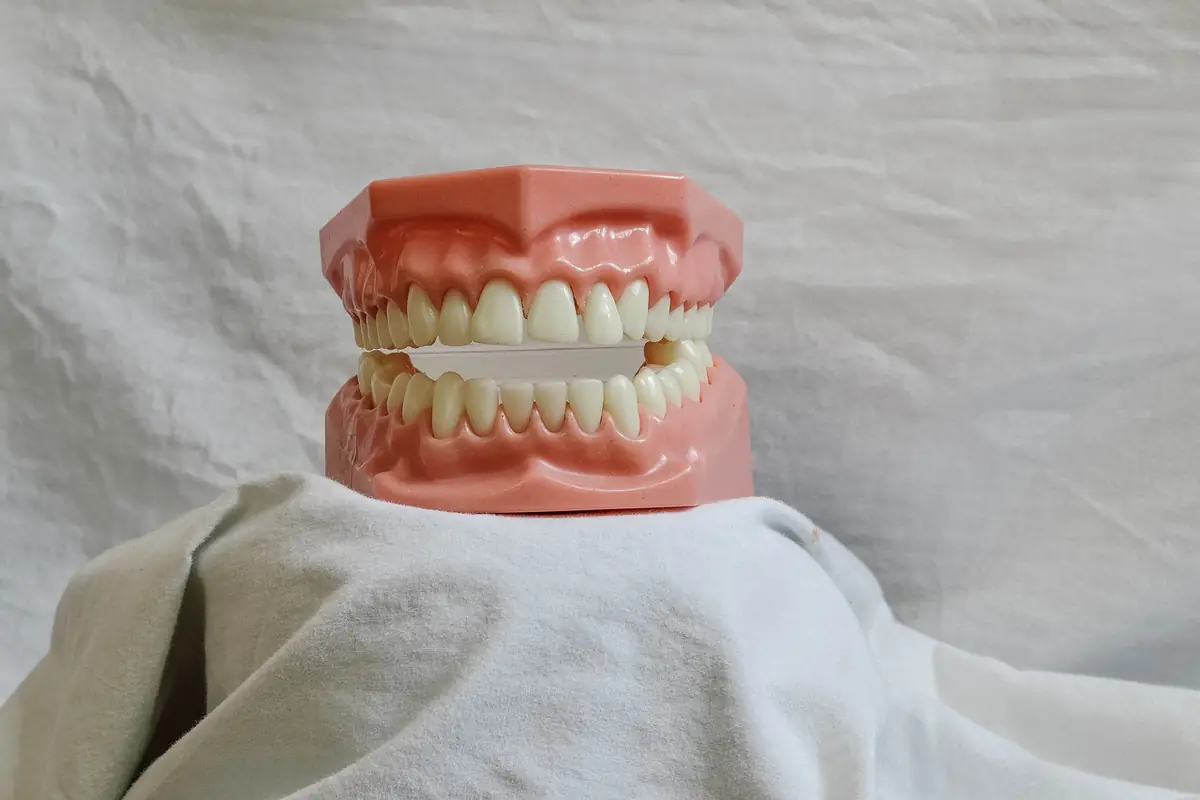
Complete dentures
A complete denture replaces all the teeth in the upper or lower jaw. The upper denture covers the roof of the mouth, which helps it stay in place. The lower denture sits on the ridge of the jaw and has less to hold onto, so it can take longer to get used to. Complete dentures restore chewing, support the lips and cheeks, and help with clear speech.
Partial dentures
A partial denture replaces some teeth and clips onto the natural teeth that remain. Partials can be made with a thin metal framework or entirely from acrylic. A partial also stops the remaining teeth from drifting into the gaps. If you only have one or two missing teeth in a row, a fixed bridge or an implant may be an alternative, and we explain how each compares.
Immediate dentures
An immediate denture is made before your remaining teeth are removed and placed on the same day as the extractions, so you are not without teeth while your gums heal. The gums and bone change shape as they heal, so an immediate denture needs adjustments and usually a reline in the months that follow.
Snap-on dentures held by implants
A snap-on denture, also called an implant-retained denture, is held in place by two or more dental implants in the jaw. Precision attachments on the underside of the denture click onto the implants, so the denture moves far less when you talk and chew. You still take it out every day to clean it and the attachments. Many people choose this for a loose lower denture. Implant treatment starts with an examination and CBCT 3D imaging to check the bone; our dental implants page explains the stages and healing time.
How new dentures are made
A new denture is made over several short visits, which suits patients who tire during long appointments.
- Examination. We check your gums, bone and any remaining teeth, and talk about how you want the teeth to look.
- Impressions. Moulds of your mouth let the laboratory shape the denture base to your gums.
- Bite records. We record how your jaws meet and choose the shade and shape of the teeth.
- Try-in. You see the teeth set in wax before the denture is finished, so we can change the look or bite.
- Fitting and adjustments. We fit the finished denture and see you again to smooth any sore spots.
If teeth need to be removed first, healing time is added to the plan. Our tooth extraction page explains what that visit involves.
Relines, repairs and adjustments
Gums and bone change shape over time, so a denture that once fitted well can become loose, rub or make it hard to eat. A reline refits the inside of the denture to your gums as they are now. Book a visit if:
- The denture moves when you talk or chew, or you rely on more and more adhesive
- Food gets trapped underneath
- Your face looks more sunken around the mouth than it used to
- There are cracks, chips or a missing tooth on the denture
A denture that rubs should be adjusted, not put up with. Sores that do not heal within two weeks need to be checked. We keep same-day emergency and walk-in slots for pain, swelling or a broken denture, so call us if yours cracks.
Looking after your dentures
Daily care keeps a denture comfortable and protects the gums underneath. Clean over a sink of water or a folded towel so a slip does not crack it, and partial denture wearers need to clean carefully around the clasps. Brush your gums, tongue and any remaining teeth with a soft brush too. Our guide dentures: types, fit and daily care covers cleaning, soaking and storage step by step, with tips for the first weeks with a new denture. Even with no natural teeth, a yearly examination is worthwhile so we can check the fit, the gums and the soft tissues of your mouth.
Dentures for seniors and their families
Our office was designed with older patients in mind: step-free and wheelchair accessible, with parking behind the building. We offer longer appointments and breaks during treatment, and morning or early afternoon times for patients who tire later in the day. With your permission, a son, daughter, spouse or personal support worker is welcome in the room. All denture appointments, from the first impressions to adjustments and repairs, take place at our office; we do not offer home visits. Our page on dental care for seniors explains how we plan around medications and health conditions.
Dentures, insurance and the Canadian Dental Care Plan
We do not post fees online, because the cost depends on the type of denture, the materials, the laboratory work and your coverage. You receive a written estimate before treatment, and for larger treatment we can send a predetermination to your insurer. We bill insurers directly and accept the Canadian Dental Care Plan, which covers complete and partial dentures, relines and repairs. Some treatments need approval from the plan first, and we send that request for you. Our guide to CDCP and crowns, bridges and dentures explains what the plan covers and how to plan.
Finding our denture office near Danforth and Warden
Dental Care For You is at Terrace on Danforth, 3520 Danforth Avenue, Unit 107, Scarborough, with parking behind the building and on Scotia Street. Patients come to us from Birch Cliff, Cliffside, Oakridge, Clairlea, Crescent Town and East York. Victoria Park station is about 2 km west along Danforth, and the 113 Danforth and 20 Cliffside buses run close by. We are open until 7 pm on Monday, Wednesday, Thursday and Friday, and on Saturday from 10 am to 4 pm. We provide care in English, Farsi and Tagalog (Filipino), and we can communicate in American Sign Language.
Reviews from Google
What patients say on Google
4.9 out of 5 from 75 Google reviews. Rating as of November 15, 2026.
Went there for the first time today and absolutely loved it there. The front desk woman is very very helpful, the dentist assistant was friendly and knowledgeable and the dentist was understanding and caring. She let me know everything in advance and had a wonderful personality. I will be going back and highly recommend.
Dr. Samar has been my regular dentist. She is very professional and has really taken good care of my teeth. She is very pleasant to interact with and you will feel very comfortable with everyone in the clinic. The dental assistant, Resty is very friendly and is very professional. She and the other dental assistants are very knowledgeable and quick to anticipate on what is needed at the moment. A highly recommended dental clinic. Thank you to the entire team!
My family have been receiving dental services for 7+years from Dental Care For You. Dr Fadavi is the best dentist we’ve ever had, I don’t think we will ever leave. She’s warm, patient, friendly and kind. My kids love her and are very comfortable with her. The office is always clean and organized. And her staff is just the same as well. Thank you doctor for always taking such good care of my family😁👍🏾
Dr. Fadavi always rendered a high quality service to me and to my family. My daughter also likes her care. She gives compassionate service. The entire dental clinic neat and clean and also hygienic. They also follow up me and my family after service. I am satisfied with their service. That is why I recommend Dental Care For You to my community and friends. 🙂
Common questions
Questions patients ask

How much do dentures cost in Scarborough?
The cost depends on the type of denture (complete, partial or snap-on), the materials, the number of visits and laboratory steps, whether teeth must be removed first, and your coverage. We do not post fees online. You receive a written estimate before we begin, and we bill insurers and the Canadian Dental Care Plan directly.
Does the Canadian Dental Care Plan cover dentures?
Yes. Complete and partial dentures, relines and repairs are part of the plan’s prosthodontic coverage. Depending on your family income you may have a co-payment, and some treatments need approval from the plan first. We send that request for you and explain what the plan pays before we start.
How can I get dentures if I cannot afford them?
Start with an examination and a written estimate, and check whether you qualify for the Canadian Dental Care Plan, which covers complete and partial dentures. Eligible low-income seniors 65 and over can also apply to the Ontario Seniors Dental Care Program, which is delivered through public health units and community health centres, not through private offices like ours.
How long do dentures last?
A denture usually serves for several years, with relines along the way, but the fit changes sooner because the gums and bone keep changing shape. Worn teeth, cracks or a loose fit are signs it is time for a reline or a new denture. A yearly check lets us catch these changes early.
Should I take my dentures out at night?
Yes. A few hours without dentures lets the gums rest and recover from pressure, and it gives you time to clean the denture well. Keep it in water or a soaking solution so it does not dry out and warp, and never put it in hot water.
What is the right way to clean and soak dentures?
Brush the denture every day with a soft denture brush and a denture cleaner or mild soap, then soak it overnight in water or a denture-soaking solution. Rinse it well before you put it back in. Regular toothpaste is too abrasive, and bleach or boiling water can damage the denture or change its fit.
What are dentures made of?
The base of a denture is made from acrylic resin coloured to look like gum, and the teeth are made of acrylic or porcelain. Many partial dentures also have a thin metal framework with clasps that hold onto the remaining teeth, which keeps them slim and strong.
Is getting full dentures painful?
Getting dentures is not usually painful, but new dentures often cause sore spots in the first weeks while the gums adjust. If teeth are removed first, the extraction sites are tender for a few days. Call us if a denture rubs, because a small adjustment usually eases it.
What foods are hard to eat with dentures?
Very sticky, very hard and tough foods, such as caramel, nuts, hard crusts and chewy meat, stay harder to manage with a removable denture. Start with soft foods cut into small pieces, chew on both sides at once and move to firmer foods over the first weeks. A snap-on denture can make chewing steadier.
Is an upper or a lower denture easier to wear?
An upper denture is usually easier, because it covers the roof of the mouth and suction helps hold it. A lower denture has less surface to sit on and the tongue moves it, so it takes longer to get used to. That is why a lower denture is often the one people choose to hold with implants.
Do snap-on dentures really work?
For many people, yes. Snap-on dentures clip onto two or more implants with precision attachments, so they move far less than a regular denture when you talk or chew. Whether they are worth it for you depends on your bone, your health and your budget, which is why we start with an examination and CBCT 3D imaging.
Are snap-on dentures the same as dental implants?
No. A snap-on denture is a removable denture that is held in place by implants. The implants stay in the jaw, and the denture clips on and off so you can clean it and the attachments. Like any denture, take it out at night to give your gums a rest.
Should I use denture adhesive?
A denture that fits well needs little or no adhesive. A small amount, used sparingly on a clean, dry denture, helps some people feel more secure. If you need more and more adhesive to keep a denture in, the fit has usually changed and a reline or adjustment is due.
How long does it take to get new dentures?
New complete or partial dentures are made over several short visits: an examination, impressions, bite records, a try-in so you can see the look and fit, and the fitting itself. If teeth need to be removed first, healing time is added, or we can make an immediate denture so you leave with teeth on the day of the extractions. We give you the expected timeline at the start.
What is the difference between full and partial dentures?
A full denture replaces all the teeth in the upper or lower jaw. A partial denture replaces some teeth and clips onto the natural teeth that remain. Your dentist checks your gums and remaining teeth and explains which type suits you.
What are immediate dentures?
Immediate dentures are made before your teeth are removed and placed on the same day as the extractions, so you are not without teeth while you heal. Because the gums shrink as they heal, immediate dentures need adjustments and usually a reline after a few months.
Can you reline or repair my dentures?
Yes. We reline dentures that have become loose as the gums change, and we repair cracks and broken teeth. Bring your denture to the office and we will tell you whether it can be fixed or whether a new one would fit better.
Do you make dentures at home or in a care residence?
No. All denture appointments, from the first impressions to adjustments and repairs, take place at our office near Danforth and Warden. The office is wheelchair accessible with parking behind the building, and we can book a longer appointment if needed.
How do I know my dentures need to be relined?
Signs include a denture that rocks or slips, sore spots, food getting under it or a need for more adhesive than before. These happen because the gums and bone change over time. A check-up once a year lets us catch fit problems early.
Appointments
Request an appointment
Send a short request and the front desk will get back to you during office hours to find a time that suits you.
- You send your name, a phone number or email, and a time that works.
- We call or email you back during office hours to confirm a time.
- Pain, swelling or a broken tooth today: please call (647) 350-4500.
Ready when you are
Call us, or send an appointment request and we’ll reply during office hours. Emergencies: please phone.