
· Clinically reviewed by Dr. Samar Fadavi, DDS
Short answer: At-home products such as whitening toothpaste and store-bought strips mostly lift surface stains or lighten teeth a little, unevenly on crowded teeth. Professional whitening, in the clinic or with custom take-home trays from your dentist, uses a supervised peroxide gel and gives more even, noticeable results. No method whitens fillings, crowns or veneers, and an exam first makes sure your teeth and gums are healthy enough.
At-home or professional whitening: which is right for you?
A brighter smile is one of the most common reasons people ask about cosmetic dental care. Store shelves are full of whitening toothpastes, strips, pens and lights, and social media is full of quick tricks. It can be hard to know what actually works, what is safe, and what is a waste of time. This guide compares at-home whitening (toothpaste, strips and gels) with professional whitening (in the clinic or with custom trays from your dentist), and explains how whitening works, what affects the shade you can reach, the side effects to expect, and the questions to ask before you start. It is general information, not advice for your own teeth.
Why teeth change colour
Teeth darken for two broad reasons, and the difference matters because whitening works well on one and poorly on the other.
Surface (extrinsic) stains
These sit on the outer surface of the enamel. Coffee, tea, red wine, cola, curry, berries, tobacco and some mouth rinses leave pigments that cling to the tooth. A professional cleaning and polish removes a good part of this staining, and whitening toothpastes can help keep it from building up.
Deeper (intrinsic) discolouration
Over time, pigments move into the enamel and the layer beneath it, called dentin. Age plays a part too. Enamel thins with years of chewing and brushing, so more of the naturally yellower dentin shows through. Other causes include:
- A tooth that was injured and has darkened, often to grey, because the nerve was damaged.
- Certain antibiotics taken while teeth were forming in childhood, which can leave grey or brown bands.
- Too much fluoride during childhood, which can leave white or brown spots (fluorosis).
- A tooth that has had root canal treatment and changed colour from the inside.
Peroxide whitening reaches below the surface, so it can lighten many yellow and brown stains. Grey banding, a single dark tooth and white spots respond less predictably and sometimes need other options.
How whitening works
Whitening gels contain hydrogen peroxide or carbamide peroxide, which breaks down into hydrogen peroxide. The peroxide passes through the enamel and breaks the large pigment molecules into smaller ones that reflect less colour. The structure of the tooth is not removed. That is the difference between whitening, which changes the colour inside the tooth, and polishing or abrasive pastes, which only work on the surface.
The strength of the gel, how long it stays on the teeth, and how many times it is applied all affect the result. Stronger gels work faster but are more likely to cause sensitivity, which is why professional products are applied with the gums protected and the strength chosen for your teeth.
Your main options
Whitening at the clinic
The gums are covered with a protective barrier, and a stronger gel is applied to the front teeth for set periods during one appointment. It gives a noticeable change in a single visit and is useful before an event, or for people who prefer not to wear trays at home. Some sensitivity for a day or two is common.
Take-home trays from the dentist
Impressions or a scan are taken to make thin, clear trays that fit your teeth closely. You place a small amount of lower-strength gel in the trays and wear them for a set time each day or night, usually over two to three weeks. Because the trays fit well, the gel stays on the teeth and away from the gums. Results build gradually, and the trays can be kept for occasional top-ups later.
Store-bought products
Whitening strips and gels sold in stores contain lower peroxide levels. They can lighten teeth a little for some people, but they fit everyone the same way, so the gel may miss the edges of crooked teeth or touch the gums. Whitening toothpastes mostly remove surface stain. They help maintain a result but rarely change the underlying shade much.
Products to be cautious about
Charcoal powders, baking soda scrubs, lemon juice and other home remedies can be abrasive or acidic. Over time they can wear enamel, which makes teeth look more yellow, not less, and can increase sensitivity. Products sold online without clear ingredient lists are also worth skipping.
At-home vs professional teeth whitening compared
- Effect on the natural shade: toothpaste, minimal; strips, mild to moderate; professional whitening, moderate to marked.
- Evenness: toothpaste works on the surface only; strips can be uneven on crowded or rotated teeth, because one-size strips do not reach every surface; custom trays from the dentist fit closely, so results are more even.
- Supervision: toothpaste and strips, none; professional whitening, an exam first and follow-up.
- Sensitivity: toothpaste, rare unless very abrasive; strips, common but usually short-lived; professional whitening, possible, and managed by your dentist.
- Fillings and crowns: none of them whiten fillings, crowns, bridges or veneers.
With strips, using a product more often or for longer than directed increases sensitivity without improving results, and gel on a tooth with an open cavity, a cracked filling or exposed roots can be very uncomfortable. Very abrasive whitening toothpastes used with hard scrubbing can wear enamel over time, so use a soft brush, gentle pressure and a toothpaste with fluoride.
Who whitening suits, and who should wait
Whitening suits adults with healthy teeth and gums whose teeth have yellowed or picked up stains over time. It is worth waiting, or choosing another approach, if:
- You have untreated cavities, cracked teeth or leaking fillings. Gel reaching the inside of a tooth through these can cause pain.
- Your gums are inflamed or receding, with exposed roots. Roots do not whiten and can become sensitive.
- You are pregnant or breastfeeding. Most dentists recommend waiting as a precaution.
- You are under about 16, when the nerves of the teeth are still large.
- You have many visible fillings, crowns or veneers on your front teeth. They will not change colour, so your natural teeth may end up lighter than them. Planning matters here.
- Your teeth are already very sensitive. This can often be managed, but it should be discussed first.
What to expect, step by step
- An exam and cleaning. Your teeth and gums are checked, cavities or gum problems are treated first, and surface stain is polished away. Sometimes a cleaning alone gives the look someone wanted.
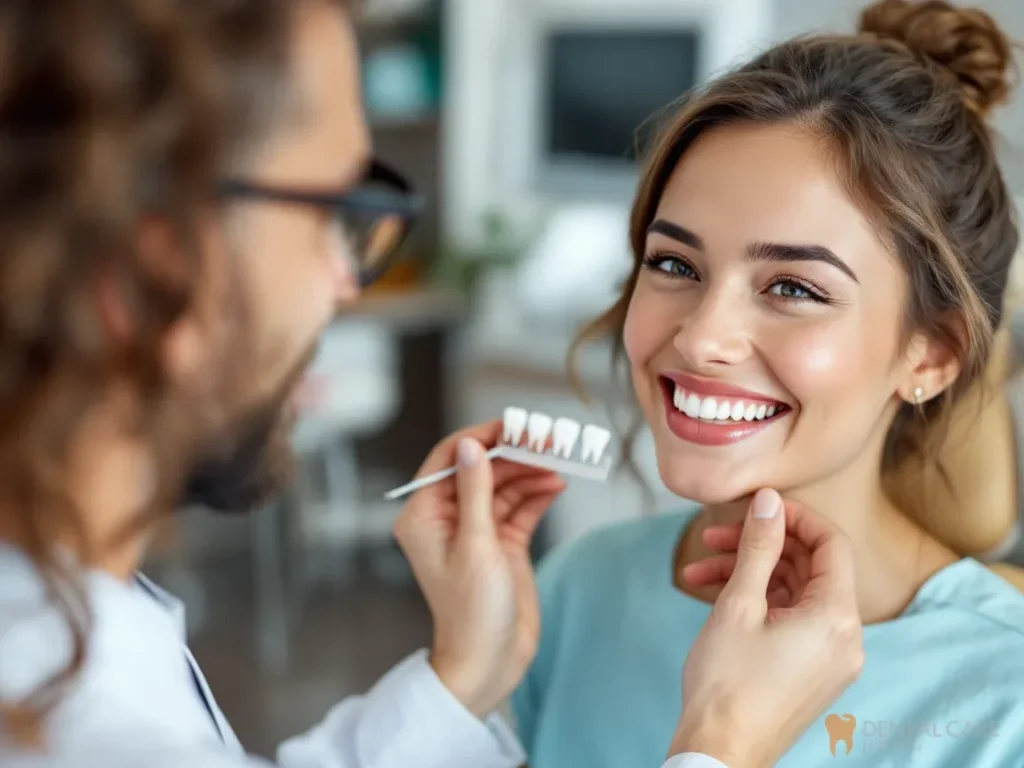
- Recording your starting shade. A shade guide or photograph records where you start, so you can see the change.
- Talking about fillings and crowns. If you have restorations on your front teeth, the dentist explains how they will look next to whitened teeth and whether they may need replacing afterwards.
- Choosing the method. Clinic whitening, take-home trays, or a combination, based on your teeth, your schedule and how sensitive you are.
- Whitening. Following the instructions for timing and amount of gel exactly.
- Review. Checking the new shade and planning any changes to old fillings, usually about two weeks after whitening, when the colour has settled.
Side effects and how to manage them
Sensitivity. The most common side effect is a temporary sensitivity to cold, or short sharp twinges, during or after whitening. It usually fades within a few days of stopping. Using a toothpaste for sensitive teeth for two weeks before and during whitening, taking a day off between sessions, or wearing take-home trays for shorter periods often helps.
Gum irritation. Gel that touches the gums can cause white patches or soreness that settle within a day or two. Well-fitting trays and careful application reduce this.
Uneven results. Teeth do not always whiten evenly. Areas near the gum, where enamel is thinner, may stay darker. White spots can look brighter for a few days before blending in.
Over-whitening. Teeth can only become so light. Repeating treatment again and again past that point mostly adds sensitivity. A natural shade that suits your skin tone and the whites of your eyes usually looks better than an extreme one.
What to avoid
- Whitening over untreated decay or gum problems. It can cause pain and does not address the problem.
- Leaving gel on longer than instructed. More time does not mean a better shade. It increases sensitivity and gum irritation.
- Abrasive home remedies. Charcoal, baking soda scrubs and acidic fruit juices can wear enamel.
- Dark food and drink right after whitening. For the first day or two, teeth pick up stain more easily. Coffee, tea, red wine, cola and tobacco are worth limiting.
- Expecting crowns or fillings to change colour. They stay the shade they were made in.
- Sharing trays or gel. Trays are made for one mouth, and gel strength is chosen for one patient.
- Whitening at a mall kiosk or salon without a dental exam. You may be whitening over a cavity or gum problem.
Keeping your shade longer
How long whitening lasts depends mostly on habits. People who drink a lot of coffee or tea, or who smoke, see colour return sooner. To keep your result:
- Brush twice a day with fluoride toothpaste, and clean between your teeth daily.
- Rinse with water after coffee, tea or red wine. A straw helps with iced drinks.
- Keep up with regular cleanings to remove surface stain.
- Use your take-home trays for a short top-up every few months if your dentist recommends it.
- Wait about thirty minutes to brush after acidic drinks such as juice, pop or wine, so softened enamel can recover.
- Quit smoking or vaping. Tobacco is one of the most stubborn sources of staining.
Timing whitening with other dental work
- Before new fillings or crowns on front teeth. Whiten first, wait a couple of weeks for the shade to settle, then match the new restoration to the lighter shade.
- After braces or aligners. Many people whiten once orthodontic treatment ends, when every surface can be reached. Some aligner plans include whitening during treatment; ask your dentist first.
- After a cleaning. Whitening works more evenly on clean teeth.
- Before a big event. Start several weeks early, so there is time for any sensitivity to settle and for touch-ups.
- After gum treatment. If you have had a deep cleaning, wait until your gums have healed and your dentist agrees.
When whitening is not the answer
Some teeth do not respond well to whitening. A single grey tooth after an injury, deep grey bands, or many old front fillings may be better treated another way. A dark tooth that has had a root canal can sometimes be whitened from the inside. Bonding, porcelain veneers or crowns can change colour and shape at the same time. White spots or streaks from early enamel changes or fluorosis may become less noticeable with whitening for some people and more noticeable for others; resin infiltration or bonding are options your dentist can explain. Our guide to veneers explains one of these options, and our cosmetic dentistry page describes how we plan changes to your smile.
Whitening and the rest of your smile
Whitening changes only the colour of natural tooth surfaces, so it helps to think about the whole smile before you start. If your gums have receded on a few teeth, the exposed root surface is naturally darker and will not lighten. If one front tooth has a large old filling, it may stand out once the teeth around it are lighter. If your teeth are crowded, gel may not reach the overlapping edges evenly. None of these rule out whitening, but each is easier to plan for before treatment than to correct afterwards. At your exam, ask the dentist to point out any teeth or surfaces that are unlikely to change, so your expectations match what whitening can do. Many people find that a cleaning, whitening and a small touch-up to one or two old fillings gives a more natural, balanced look than whitening alone.
When to see a dentist
- Before starting any whitening, if it has been more than a year since your last check-up.
- If sensitivity is severe or lasts more than a few days after you stop.
- If a single tooth has darkened, especially after a knock. This can mean the nerve has been damaged and needs checking.
- If your gums are sore, white or peeling after using a product.
- If you have fillings or crowns on your front teeth and want them to match.
Our teeth whitening page explains how whitening is offered at our office on Danforth Ave.
Questions about tooth whitening
Is whitening safe for my enamel?
When used as directed, peroxide whitening products from a dentist are considered safe for enamel. Problems come mostly from overuse, poorly fitting trays and abrasive or acidic home remedies.
How white will my teeth get?
It depends on your starting shade, the type of staining and how your teeth respond. Yellow and light brown stains usually respond well; grey staining less so. The dentist can give you a realistic idea after an exam.
Will whitening work on my crowns or veneers?
No. Porcelain and composite materials do not change colour with peroxide. If they are on your front teeth, plan any replacements for after whitening, once the new shade has settled.
Can I whiten if I have sensitive teeth?
Often, yes, with adjustments: a lower-strength gel, shorter sessions, breaks between days and a toothpaste for sensitive teeth. Let us know about sensitivity at your exam.
Do whitening toothpastes work?
They help remove and prevent surface stains. They do not usually change the natural shade of the tooth very much.
Why did my teeth look spotty right after whitening?
Teeth lose a little moisture during whitening, which can make white spots stand out. This usually evens out within a few days as the teeth rehydrate.
Can teenagers whiten their teeth?
Whitening is usually delayed until the mid-teens, when the nerves of the teeth are smaller. Discuss it with the dentist first.
Does whitening hurt?
Most people feel nothing during treatment, or mild twinges. Sensitivity afterwards is common and usually short-lived.
Do whitening strips work?
For many people with yellow-toned stains, yes, gradually. Results vary widely, and strips can leave the edges of crowded teeth darker because they do not reach every surface.
Are whitening strips safe?
For most adults with healthy teeth and gums, used as directed, yes. Sensitivity and gum irritation are the most common side effects.
Can I whiten my teeth while wearing clear aligners?
Sometimes. Ask your dentist, because some aligner plans include whitening and others suggest waiting until treatment ends.
Is whitening covered by insurance or the Canadian Dental Care Plan?
Whitening is cosmetic and is usually not covered by insurance. It is not covered by the Canadian Dental Care Plan.
Related guides
Thinking about whitening? Call Dental Care For You at (647) 350-4500 or send us a message. We will check your teeth first and talk you through the options.
About this guide
Prepared by the team at Dental Care For You, 3520 Danforth Ave, Unit 107, Scarborough, ON M1L 1E5. Phone (647) 350-4500.